Floating knife
Summary
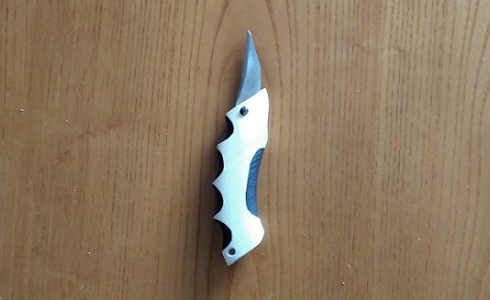
This knife was designed to be used on a boat, kayak or any other place where a knife is needed in the sea or in a lake. It floats on fresh or salt water. The knife also takes easily changeable blades. In this page there is all the necessary information and files for building it.
Design idea
The main body of the knife is designed to be printed whole. This way an air tight cavity can easily be created on the inside by using the infill density setting while 3d printing. This cavity is the main source of buoyancy for the knife. After calculating the volume and weight of the knife handle, the blade and rest of the components were designed so that the total weight was kept bellow that of the knife's volume in water.
Other than the main body of the handle there are a few extra components to secure the blade in place, to make the handle a bit more durable and some for pure aesthetic reasons. These components are as seen in the image bellow:
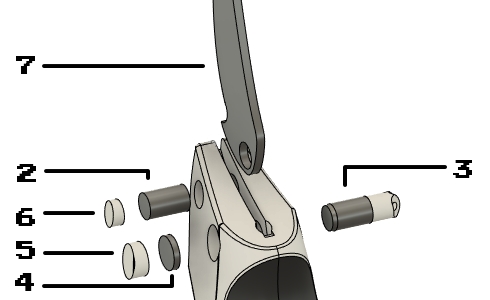
- Rods - metal rods to reinforce the handle
- Pin - securing the blade
- Removable pin - securing the blade
- Magnet - keeps removable pin in place
- Cap A - aesthetic
- Cap B - aesthetic
- Blade
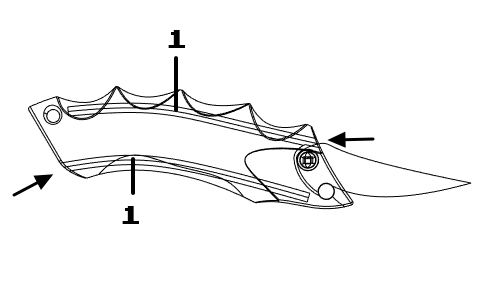
The arrows in the last image show the positions where the rods are inserted.
Handle
The handle and both cap parts are supposed to be 3d printed. ABS plastic should be used for good durability.
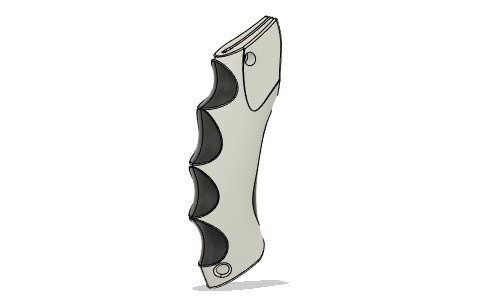
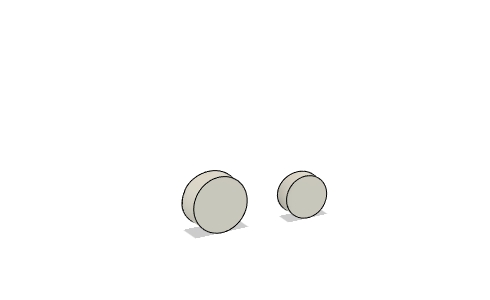
The STL files for the three parts can be downloaded here.
The knife is to be printed with an orientation as shown in the next image:
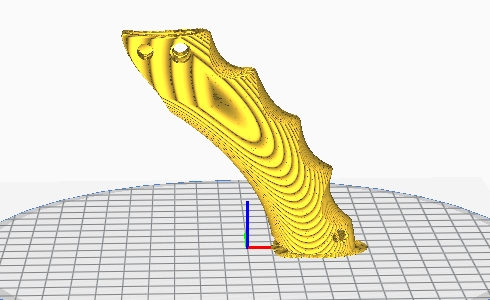
Print bed supports are enable and should only cover the back end of the handle. The rest of the handle can be printed without supports. layer height should be set at 0.2mm. A brim can be used for better bed adhesion.
Pins
A fixed and a removable pin are used to secure the blade to the handle. When the removable pin is detached, the blade can slide out of the handle and be replaced.
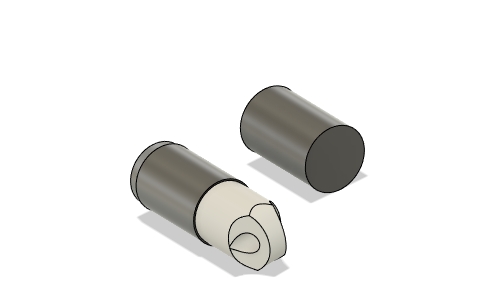
The pins can be cut from a 5mm steel rod. Other materials can also be used for the fixed pin but the removable one must be magnetic so that it can be held in place by the magnet.
The removable pin was designed to take a small 3d printed handle but the prototype was made without this plastic part.
Blade
Any 2mm thick sheet steel suitable for hardening and blade manufacturing can be used.
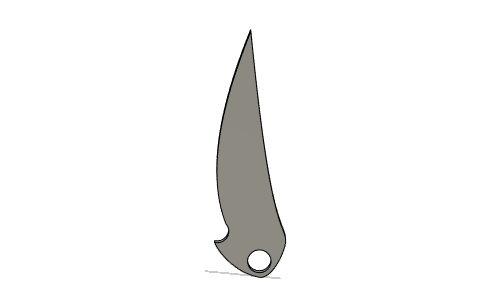
The bottom portion of the blade should be cut with high precision. A deviation from the geometry can result in the blade not fitting on the handle or not fitting perfectly and having a bit of play. Ideally, a CNC method should be used for cutting the blade for the knife out of the bulk material. The most important geometry on the blade is the size and position of the two holes.
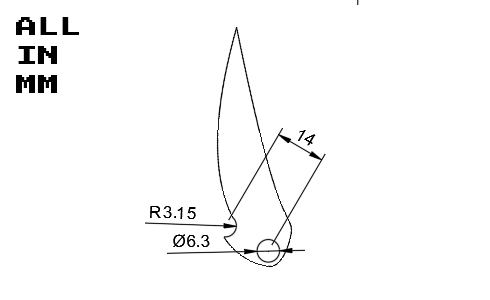
A blade drawing(PDF) and a DXF file can be downloaded here.
After the blade is cut it should be heat treated and sharpened.
Rods
On the front and back of the handle there are two holes that run through the printed layers of the handle. Two rods of some sturdy material should be glued in these holes to help prevent layer separation of the handle. Steel rods were used in the prototype handle but other lighter materials could be a better option. The rods should be somewhat flexible since they need to be bent in place.
Magnet
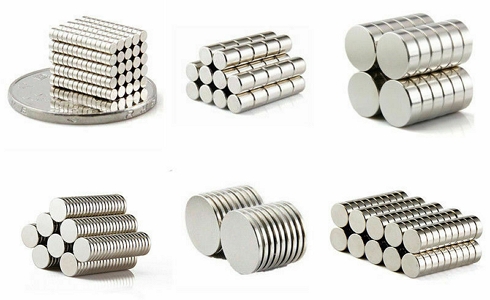
A small neodymium magnet is used in the design. These magnets are widely available in the market in various sizes.